Movie-themed slot games have become popular choices for players who enjoy games based on their favorite films. These slots work on both phones and desktops, but many players wonder if the experience changes depending on which device they use. The question matters because it can affect how someone plays and whether they enjoy the game.
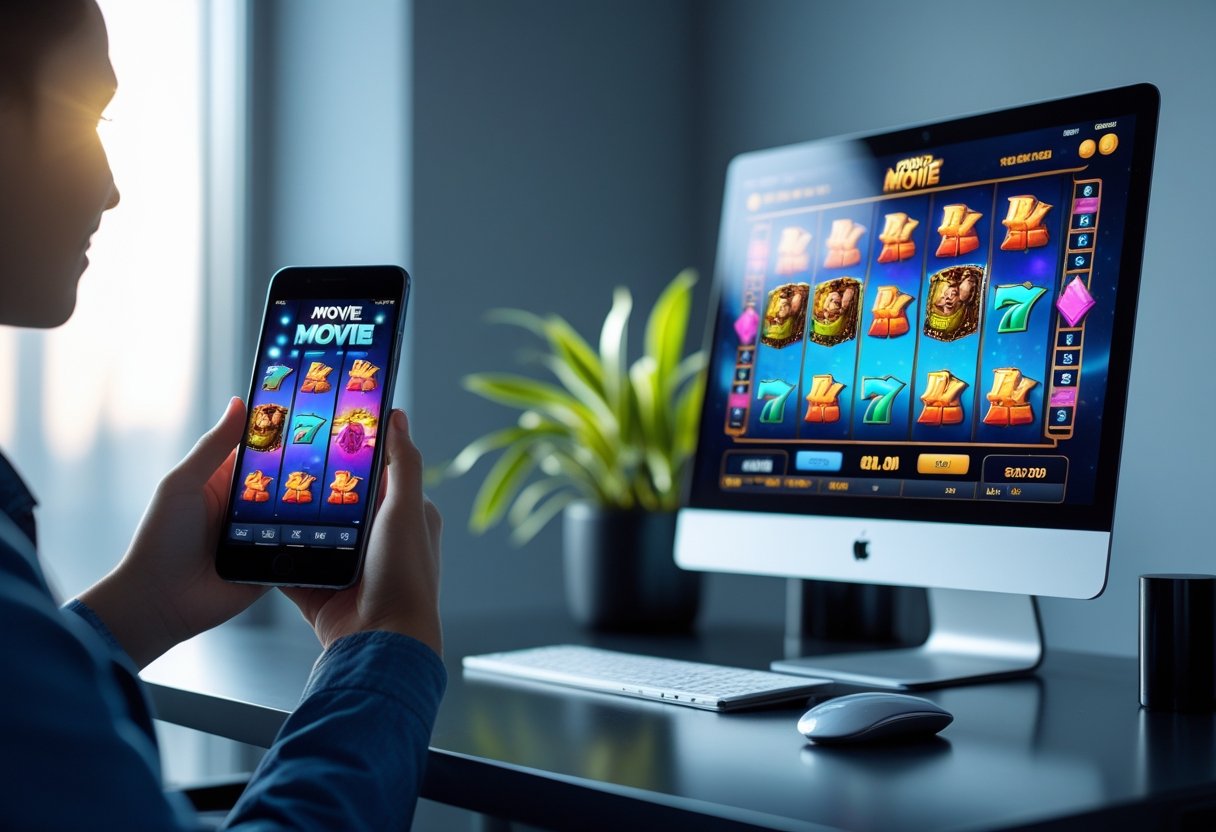
Mobile and desktop movie slots do play differently due to changes in screen size, touch controls versus mouse clicks, and how game designers adapt features for each platform. The games themselves use the same math and odds, but the way players interact with them varies. A phone screen requires bigger buttons and simpler layouts, while a desktop can show more details at once.
The differences go beyond just what players see on the screen. Game features, bonus rounds, and even how smoothly the reels spin can change between devices. Understanding these differences helps players pick the right option for their needs and preferences.
Core Differences Between Mobile and Desktop Movie Slots
Movie slots adapt to fit different devices, but the changes go beyond just screen size. The way players interact with controls, how games look and run, and even audio quality shift between platforms.
Gameplay Experience
Mobile movie slots use touch controls instead of mouse clicks. Players tap to spin reels and swipe to access menus. This creates a more direct feel but requires larger buttons and simplified interfaces.
Desktop versions offer more precise control with a mouse and keyboard. The extra screen space allows developers to show more information at once. Players can see their balance, bet size, and paytable without switching screens.
Mobile games typically load faster but may have slightly delayed responses during bonus rounds. The games work in both portrait and landscape modes, though landscape provides a better view of widescreen movie footage.
Battery life becomes a concern on mobile devices. Movie slots with heavy graphics drain power faster than simple games. Desktop players never worry about their device dying mid-spin.
Graphics and Performance
Desktop movie slots display higher resolution graphics and more detailed animations. The larger screens show crisp images of movie characters and scenes without compression. Special effects like explosions or magical spells appear more impressive on bigger displays.
Mobile versions scale down visual elements to fit smaller screens. Developers simplify backgrounds and reduce particle effects to maintain smooth gameplay. The core movie imagery stays recognizable, but fine details get removed.
Frame rates differ between platforms. Desktop slots often run at 60 frames per second with no stuttering. Mobile devices may drop to 30 fps during intense bonus features or free spin rounds.
Loading times vary based on internet connection and device power. Older mobile phones struggle with graphics-heavy movie slots. Desktop computers handle complex visual effects without slowdown.
Sound Effects and Audio Quality
Desktop setups provide superior audio through external speakers or quality headphones. Movie slots sound more cinematic with deeper bass and clearer dialogue clips. Licensed soundtracks play at higher bitrates without compression.
Mobile devices compress audio files to save data and storage space. The built-in speakers lack power for dramatic sound effects. Players get the best mobile audio experience through headphones, but it still falls short of desktop quality.
Background music often gets simplified on mobile versions. Some games reduce the number of audio layers during bonus rounds to prevent performance issues. Voice lines from movie characters may play at lower volumes to preserve battery life.
User Interface and Controls
Mobile and desktop movie slots use different control systems that change how players interact with the game. Touch-based controls on phones work differently than mouse-and-keyboard setups on computers, which affects button placement, navigation menus, and how the screen displays game information.
Touchscreen Interactions
Mobile movie slots rely on touch gestures that feel natural on handheld devices. Players tap the spin button, swipe to adjust bet amounts, and pinch to zoom on paytables. These touch controls eliminate the need for a mouse cursor, making actions feel more direct.
The tactile feedback from touching the screen creates a different playing experience than clicking a mouse. Players can tap and hold buttons for auto-spin features or quickly swipe through game menus. Some movie slots include gesture shortcuts, like swiping up to access the paytable or double-tapping to repeat the last bet.
Touch controls work well for quick gameplay sessions but can sometimes lead to accidental taps. Game developers add confirmation screens for large bets or include slight delays to prevent unintended spins.
Button Layouts and Navigation
Desktop movie slots spread controls across the bottom of the screen with clearly labeled buttons for spin, bet adjustment, autoplay, and settings. The larger screen space allows developers to keep all controls visible without cluttering the interface.
Mobile versions condense these controls to fit smaller screens. Buttons become larger and more touch-friendly, often taking up more screen space proportionally. Navigation menus typically hide behind hamburger icons or slide-out panels to preserve space for the game reels.
Key control differences:
- Bet controls appear as +/- buttons on mobile vs detailed slider bars on desktop
- Settings menus collapse into icons on mobile but stay expanded on desktop
- Information panels overlay the game screen on mobile instead of sitting beside it
Screen Size Adaptations
Desktop monitors display movie slots with all game elements visible simultaneously. The reels, paytable, balance information, and control panel fit on one screen without scrolling or hiding any features.
Mobile screens force developers to prioritize what appears on screen. Game reels take up most of the display, while secondary information moves to separate screens or pop-up windows. Players must tap icons to view paytables, game rules, or bonus feature explanations.
Portrait mode on phones makes reels appear taller but narrower, while landscape mode provides a wider view similar to desktop but with less vertical space. Many movie slots adjust their layout automatically based on device orientation, repositioning buttons and game information to match the screen shape.
Accessibility, Features, and Compatibility
Movie slots maintain their core gameplay across devices, but the features available and how players access them can vary between mobile and desktop platforms. Touch controls, screen size, and device capabilities shape what bonus options appear and how smoothly games run on each platform.
Bonus Features and In-Game Options
Desktop versions of movie slots typically offer the full range of bonus features without modification. Players see detailed paytables, extensive settings menus, and multi-layered bonus rounds that take advantage of larger screens. Free spins, pick-and-click games, and progressive jackpot displays all appear with complete information visible at once.
Mobile versions sometimes simplify these features to fit smaller screens. Bonus rounds may use swipe gestures instead of click-and-drag mechanics. Paytables often convert to scrollable lists rather than multi-page spreads. Some older movie slots strip out resource-intensive animations during bonus features to maintain smooth performance on phones.
Common mobile adjustments include:
- Simplified bonus game interfaces
- Touch-optimized button sizes (larger tap zones)
- Streamlined settings menus
- Condensed information displays
Platform-Specific Optimizations
Game developers create separate builds for mobile and desktop to match each platform’s strengths. Desktop slots leverage better graphics cards to display high-resolution movie clips, detailed character animations, and complex visual effects. These versions support keyboard shortcuts and mouse-over tooltips that provide extra information without cluttering the screen.
Mobile builds prioritize battery efficiency and data usage. Developers compress video files, reduce particle effects, and optimize loading times. Touch controls replace hover actions, and buttons grow larger for easier tapping. Some mobile slots include portrait mode while desktop versions only run in landscape.
The gap between platforms has narrowed as mobile devices become more powerful, but desktop versions still handle resource-heavy features better.
Cross-Device Account Access
Most online casinos allow players to switch between mobile and desktop using the same account. Game progress, including bonus rounds and feature unlocks, typically syncs across devices. A player can start a session on desktop and continue on mobile without losing their place.
Account balances update in real-time regardless of which platform a player uses. Loyalty points, tournament standings, and unlocked movie slot content remain consistent. Some casinos require separate app downloads for mobile while others use responsive web design that works on any device through a browser.
Players should verify their chosen casino supports cross-platform play before assuming all features transfer seamlessly between devices.